Nvidia's new was surprise-launched yesterday, and true to form, the company has some eye-popping marketing claims to promote the new graphic cards. Nvidia has when using DLSS technology.
The graph is titled ">50X Performance for 10s of Millions of Gamers", but clearly shows the well beyond the 60x marker versus the GTX 1050 baseline.

And, actually, isn't that a pretty good story to tell to gamers? Nvidia's narrative here is that over 50 million gamers are still using x50 and x60 GPUs from the Pascal, Turing and Ampere GPU generations. Specifically, that's the GTX 1050 and 1060, the GTX 1650 and 1660 and the RTX 3050 and 3060.
So, while the RTX 5050 is entry level by today's standards, it represents a major upgrade for lots of สมัคร winner55 เครดิตฟรี gamers. It's not entirely clear exactly which GPUs Nvidia has in mind when it says ">50X Performance for 10s of Millions of Gamers." Even with the latest DLSS tech, the RTX 5050 isn't anything like 50 times faster than an RTX 3060. So, that headline >50x metric is comparing the RTX 5050 with the oldest Pascal GPUs.
But surely over 10 times the performance in pure raster is a very good result for gamers using those old GPUs? If you then make DLSS an additional and extremely welcome benefit, rather than making direct frame-rate comparisons, then you have a very compelling narrative.
| Header Cell - Column 0 | RTX 5050 | RTX 5060 | RTX 4060 |
|---|---|---|---|
Cores | 2560 | 3840 | 3072 |
L2 cache | 32 MB? | 32 MB | 24 MB |
Base clock | 2.31 GHz | 2.28 GHz | 1.83 GHz |
Boost clock | 2.57 GHz | 2.50 GHz | 2.46 GHz |
Memory bus width | 128-bits | 128-bits | 128-bits |
VRAM | 8 GB GDDR6 | 8 GB GDDR7 | 8 GB GDDR6 |
VRAM bandwidth | 320 GB/s | 448 GB/s | 272 GB/s |
TGP | 130 W | 145 W | 115 W |
MSRP | $249 | $299 | $299 |
You also sidestep any pushback concerning the limitations of DLSS. At minimum, it remains to be seen how usable Multi Frame Generation is with the new RTX 5050. Given it's a relatively weak GPU for which input lag winner55 ทางเข้า สล็อต will inherently be more of an issue compared to RTX 50 graphics cards higher up the stack, the fact that MFG adds latency means it's likely to be more problematic for this entry-level GPU.
That's actually OK, provided DLSS performance isn't being directly compared with rasterisation. DLSS doesn't always have to work perfectly for it to be an unambiguous benefit. But just as Nvidia overreached thanks to DLSS, to put it gently, this whole "50x" thing with the new RTX 5050 feels a little unnecessary.
👉👈
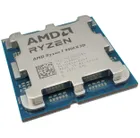
1. Best CPU:
2. Best motherboard:
3. Best RAM:
4. Best SSD:
5. Best graphics card: or (whichever is cheaper)